
For example, with asymmetric encryption, when an e-mail is encrypted utilizing a public key, it could only be decrypted by the recipient with the corresponding personal key. Alternatively, when someone signs a document with their personal key, solely the corresponding public key can be used for signature verification/authenticity. As we’ve simply seen, generating new keys for each encryption is difficult and costly.
What’s The Difference Between Symmetric And Public Key Cryptography?
With automation, organizations can often replace encryption keys with out disrupting operations. This proactive strategy reduces the probability of utilizing outdated or susceptible keys, enhances operational efficiency, and mitigates errors in the key administration lifecycle. Key management encompasses the processes and technologies used to create, store, distribute, and management entry to encryption keys. As A Result Of the security of symmetric encryption depends entirely on preserving the important thing secure.
Generic secret detection requires more subtle entropy-based evaluation https://xosokq.info/backtesting-software-validating-your-strategy-with-history/ and pattern recognition to determine potentially leaked symmetric keys in code repositories, logs, and configuration recordsdata. Since the secret’s only generated and used within the utility’s session, it is ephemeral and tied directly to the appliance instance. Once the appliance stops or restarts, the secret’s discarded and regenerated, guaranteeing no sensitive information persists past the runtime. A prime example is the interaction between an RFID smart card reader and the good card itself.
How Beyond Identification & Nametag Cease Identification Fraud At Onboarding & Restoration
- This adds an additional layer of safety while improving effectivity and compliance with industry requirements.
- Nevertheless, as a outcome of these keys are long-lived and directly tied to application performance (like signing JWTs or encrypting configurations), their safe dealing with all through their lifecycle is essential.
- In words, given ciphertext \(C\) and key \(K\), the \(j\)th bit of the plaintext is the \(j\)th little bit of the ciphertext, XOR with the \(j\)th little bit of the key.
- An encryption algorithm — generally called a cipher — establishes a mathematical set of rules that outline how the key alters the info.
- Symmetric cryptography powers every thing from HTTPS to JWT tokens, however key administration stays a significant challenge.
- For most use circumstances, it is usually potential to depend on higher-level cryptographic protocols or hybrid cryptosystems (as seen in GPG).
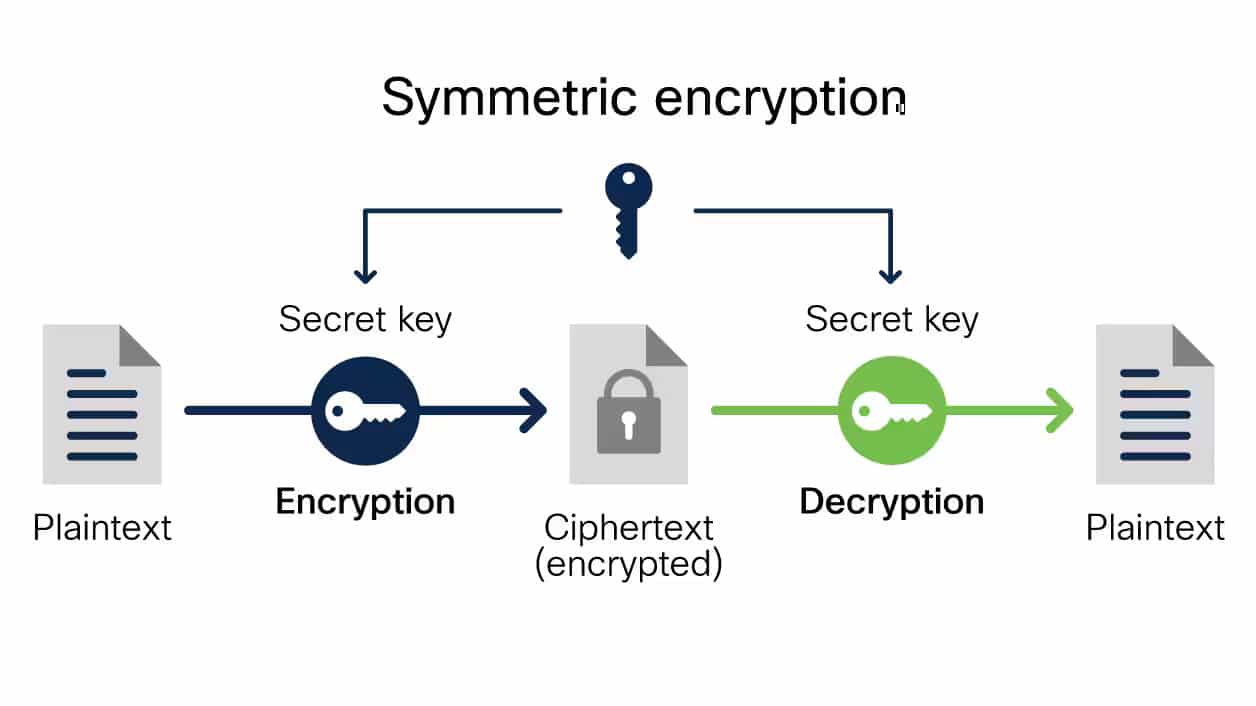
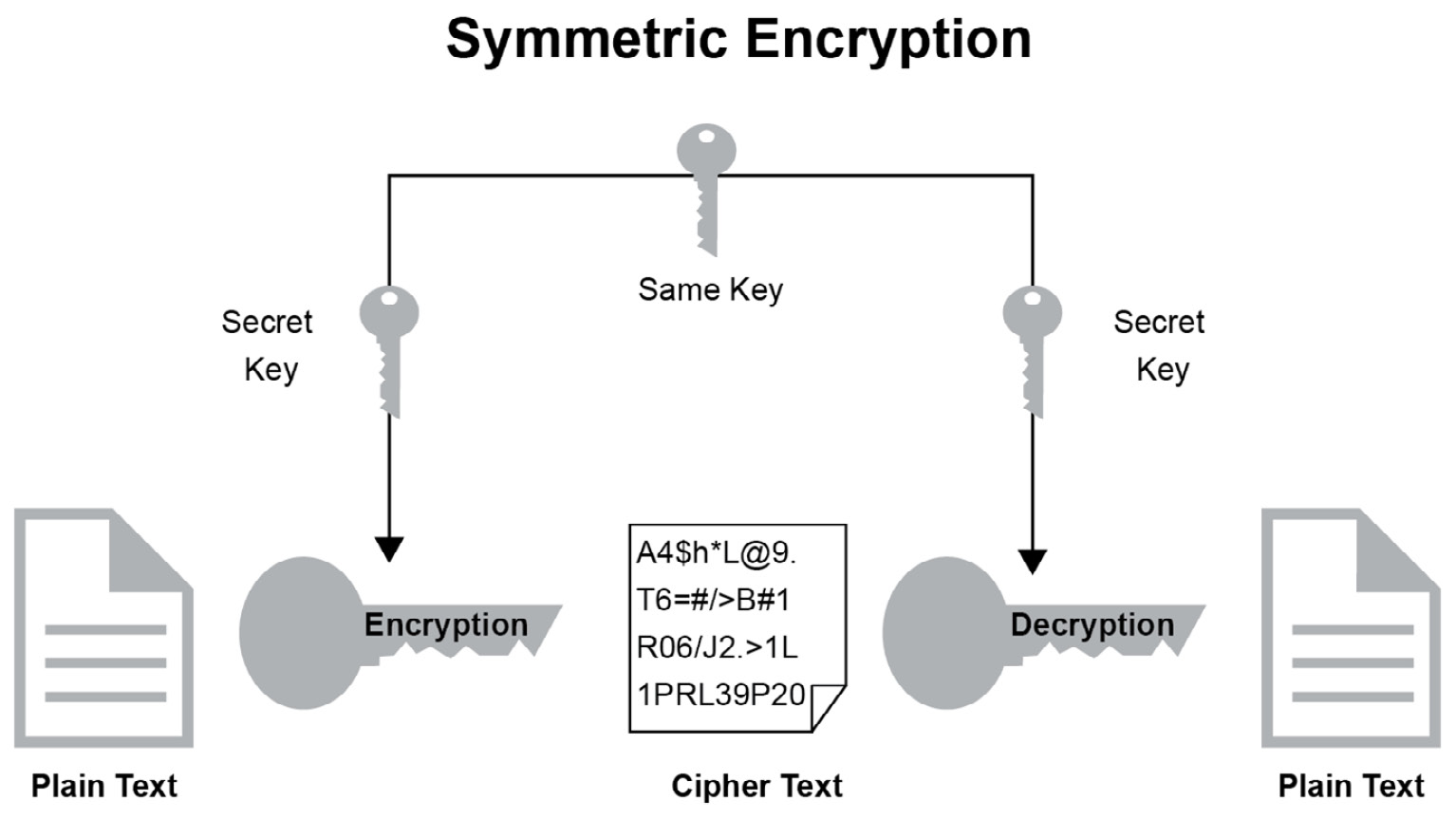
Symmetric cryptography is thought for being quicker and less complicated than asymmetric encryption, making it ideal for effectively encrypting large quantities of information. Symmetric encryption is a technique of scrambling information using a single shared secret key. Whoever holds that key can each encode (encrypt) and decode (decrypt) the knowledge. The basic analogy is a locked mailbox that you and your trusted pal both have the key to. You can ship a secret letter, the pal unlocks it, and no eavesdropper can learn the note unless they steal the important thing. Related to session keys, self-use keys aren’t typically shared with exterior events, simplifying the key management drawback to a degree.
Session Keys: Letting Protocols Deal With The Heavy Lifting
Symmetric encryption may be simpler to know, nevertheless it relies on each parties sharing the same key, which may create challenges in terms of secure key distribution. This is whereasymmetric encryption shines, because it makes use of a pair of keys—one public and one private—to address this problem. PSKs ought to solely be used in environments the place dynamic key trade is impractical, such as disconnected infrastructure or extremely resource-constrained devices (e.g., smart cards, IoT).
6 Block Cipher Modes Of Operation
Due To This Fact it is https://fernzion.org/on-line-driving-programs-rospa-office-security-weblog.html a lot different than other algorithms which work on Feistel Ciphering. Symmetric Key Cryptography also known as Symmetric Encryption is when a secret key is leveraged for both encryption and decryption capabilities. This methodology is the alternative of Asymmetric Encryption the place one key is used to encrypt and one other is used to decrypt. During this course of, knowledge is converted to a format that can not be learn or inspected by anybody who doesn’t have the secret key that was used to encrypt it.

If we didn’t force \(M_0\) and \(M_1\) to be the same size, then our recreation would incorrectly mark some IND-CPA safe schemes as insecure. In explicit, if a scheme leaks the plaintext size, it might possibly still be thought of IND-CPA secure. To account for the reality that cryptosystems can leak plaintext length, we use equal-length messages within the IND-CPA game. Centralized key administration methods simplify key generation, storage, and distribution by consolidating these processes in one platform. Reusing keys across a number of messages or utilizing predictable keys exposes systems to cryptanalysis.
By changing keys at predefined intervals or after particular occasions (such as suspected exposure), organizations restrict the potential injury attributable to unauthorized entry. Key rotation ensures that even when one is intercepted, it becomes obsolete quickly, safeguarding long-term knowledge integrity. Wherever you see “data at rest” or bulk knowledge wants, symmetric encryption is probably at work. These advantages explain why symmetric cryptography is used roughly in all places cryptographic security is required, including in frequent use cases all through the software program growth lifecycle. In encryption, the algorithm transforms the data in a format which can’t be understood by anyone.